
Google Search Console Now Shows AI Search Visibility - What Should You Be Tracking?
For a while, one of the biggest frustrations with AI search has been measurement. Businesses could see AI Overviews and AI Mode appearing more frequently in Google Search, but understanding whether their own website was actually being surfaced within those results was far less straightforward.
That has now started to change.
Google has introduced a dedicated Generative AI Performance report in Search Console, giving website owners a clearer view of how their pages are appearing within AI-powered Search experiences. As of 31 August 2026, Google says the reporting has rolled out worldwide.
For businesses already investing in SEO and Generative Engine Optimisation, this adds another useful layer of visibility and helps make AI search performance easier to understand.
What Does the New Search Console Report Show?
The new report focuses specifically on website visibility within Google’s generative AI features, including AI Overviews and AI Mode.
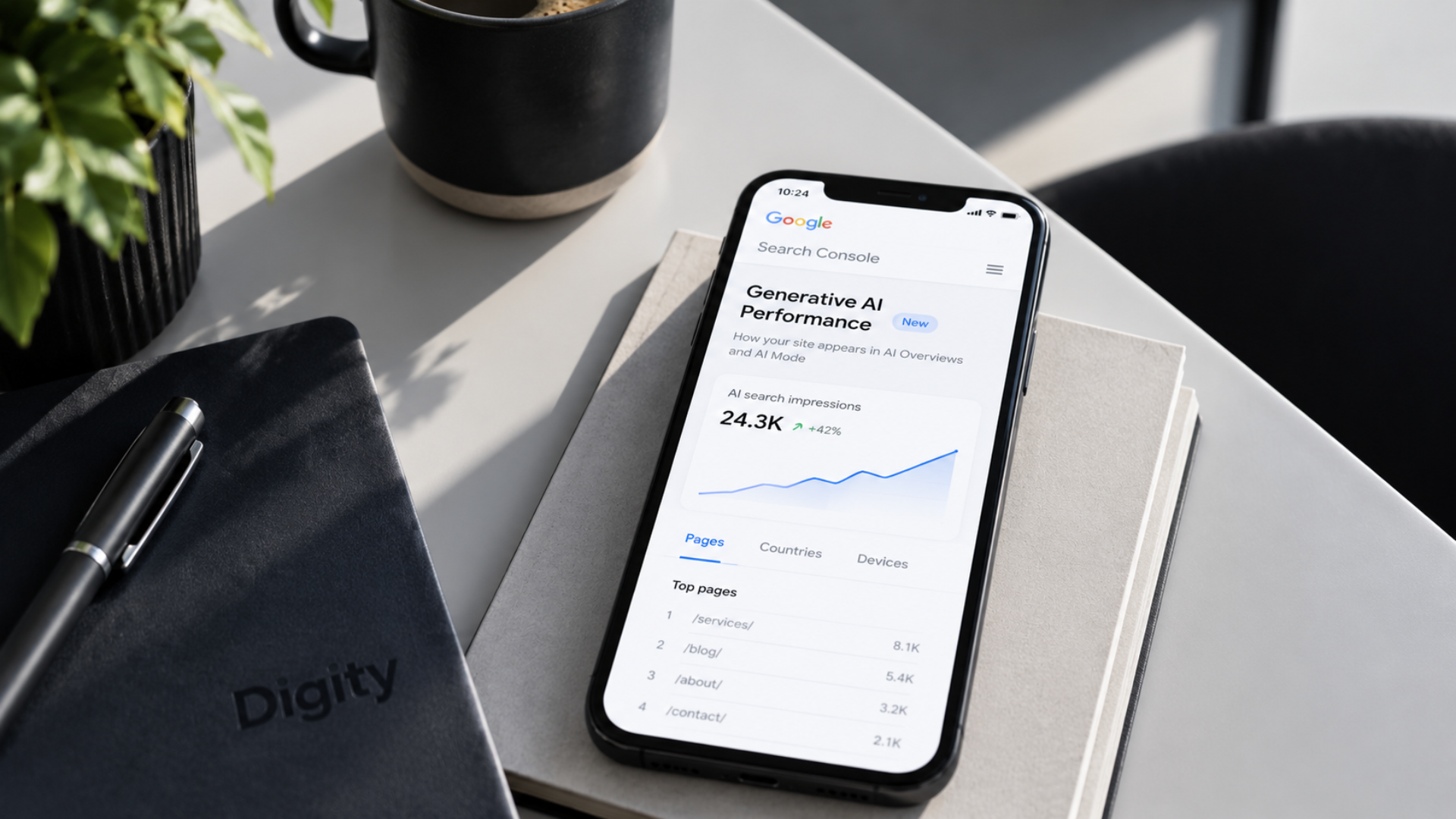
It allows businesses to see how many AI search impressions their website is receiving, which pages are appearing most frequently, how visibility is changing over time and where those impressions are coming from by country and device.
An impression is counted when a link to your website is shown within one of Google’s supported generative AI features.
On the surface, that may sound like a fairly straightforward reporting update, but it gives businesses something they have been missing: a clearer indication of whether Google is actually using their website within AI-powered search results.
Look Beyond the Total Number
The most useful part of the report is not necessarily the overall impression figure, but which pages are earning that visibility.
If particular service pages, blogs, guides or case studies are repeatedly appearing in AI results, that gives you a better understanding of the information Google currently sees as relevant and useful enough to surface.
For example, if your strongest AI visibility is concentrated around one particular service area, that may suggest Google already has a clear understanding of your expertise there. Equally, if another core service receives very little visibility, it may highlight an opportunity to strengthen the content and supporting authority around that topic.
This is where the report becomes valuable for content strategy, because instead of simply guessing which content is gaining traction, you can begin using real visibility data to shape what comes next.
Track the Direction, Not Just the Snapshot
As with any new metric, the trend over time is often more useful than a single number.
If AI visibility is steadily increasing across several months, it may suggest Google is developing a stronger understanding of your website and the topics it should associate with your business. If visibility drops, it gives you something worth investigating, while a flat result could indicate that your current content and authority-building activity is not yet creating enough momentum.
Our approach to Generative Engine Optimisation is built around making businesses easier for AI platforms to understand, reference and recommend. Having more visibility data now gives us another way to assess whether that work is moving in the right direction.
AI Impressions Are Not the Same as Website Traffic
This is an important distinction.
The dedicated Generative AI report currently focuses on impressions, which means it shows whether your site has appeared within AI-powered results, but not necessarily how much traffic or how many enquiries those appearances have generated.
A rising AI impression graph may therefore be encouraging, but it should not be treated as a commercial result in isolation.
The more useful approach is to look at Search Console alongside your wider analytics data so you can understand what happens once people actually reach the website, including engagement, conversions and other meaningful actions.
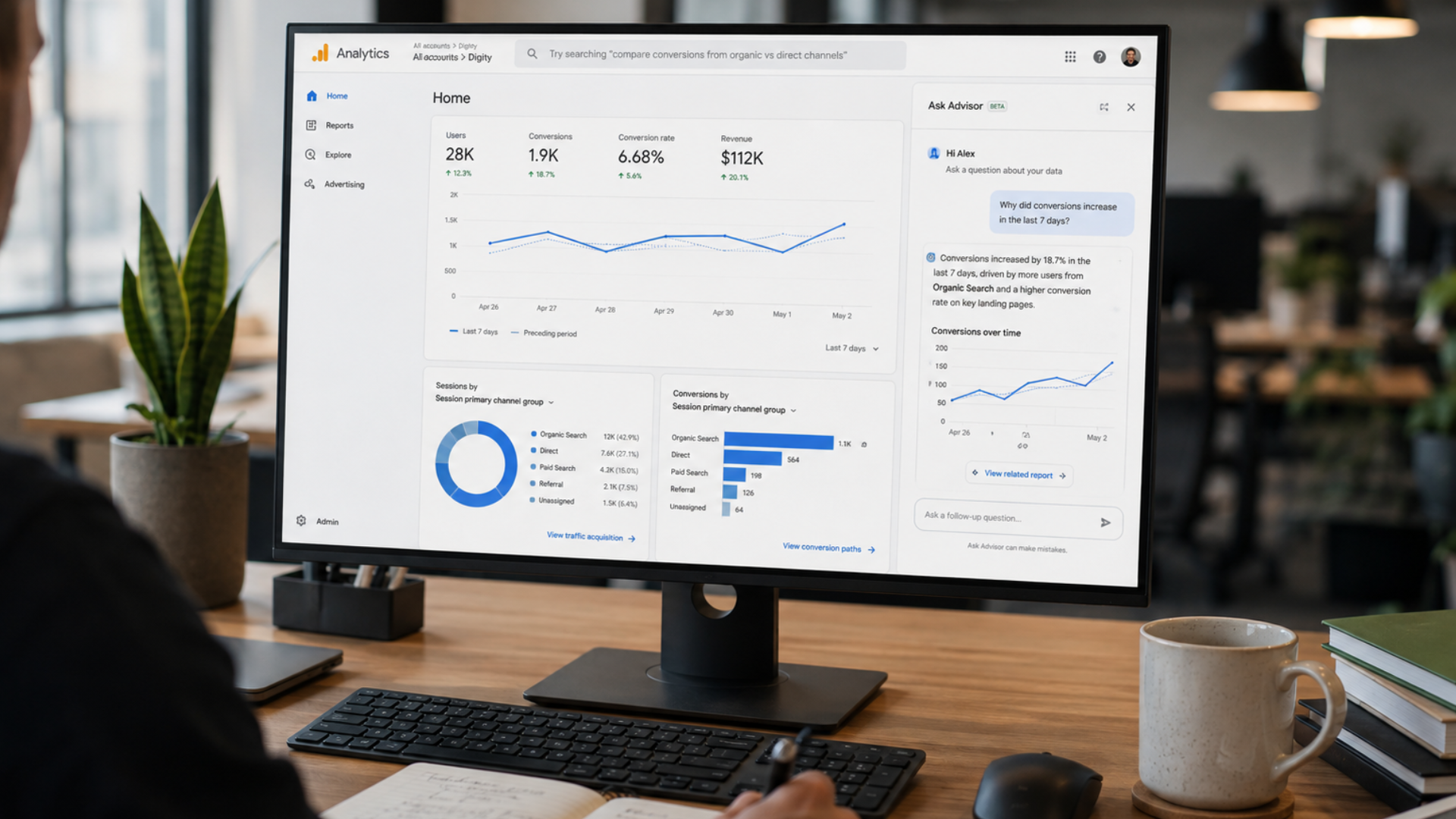
This follows the same principle we discussed in our recent article on Google Analytics Ask Advisor: the real value does not come from simply having more data, but from understanding what that data is telling you about the business.
Use the Report to Spot Gaps
The new report can also help reveal where your website isn’t appearing.
Imagine you offer five core services, but almost all of your AI visibility comes from only one or two of them. That could indicate that Google has much stronger evidence of your expertise in those areas, while the others may need more support.
At that point, it is worth reviewing whether those service pages contain enough useful information, whether you have supporting blogs and case studies, whether the topic is clearly connected across the website and whether other credible sources are reinforcing your expertise.
This is where website structure, SEO, content and wider authority begin to work together.
AI optimisation should not be treated as a separate tactic added onto the end of a marketing strategy. The strongest results are more likely to come from a well-connected digital presence that makes your expertise clear across multiple touchpoints.
Don’t Start Optimising for the Graph
Whenever a new metric becomes available, there is always a temptation to focus on making the number go up.
That should not be the goal here.
Google’s own guidance remains that the fundamentals of good SEO still apply to AI Overviews and AI Mode. Pages need to be technically accessible, useful, reliable and genuinely valuable to the person searching, so there is no separate shortcut for appearing within these features.
The better approach is to focus on giving Google - and your customers - stronger evidence of what you know.
That means useful service pages, genuine expertise, original insight, detailed case studies, clear internal linking and content that answers the questions your audience is actually asking.
What Should Businesses Do Now?
If you use Google Search Console, the first step is simply to check whether the new Generative AI report is available for your property and begin building a baseline.
Look at which pages are appearing, how visibility is changing and where the strongest areas of your website currently sit. From there, the more interesting question becomes:
Does the way Google sees your expertise match the way you want your business to be seen?
We explored that wider issue in What Does AI Think of Your Business?, and this new reporting gives businesses another practical way to start finding the answer.
AI Search Is Becoming Easier to Measure
AI search visibility has often felt difficult to quantify, and this update does not solve everything. Businesses still do not have the same depth of reporting for AI search that they are used to seeing for traditional organic search.
However, it is a significant step forward because businesses can now see more clearly whether their website is appearing, which content Google is surfacing and whether that visibility is growing over time.
At Digity, we combine SEO, content creation and Generative Engine Optimisation to help businesses strengthen their visibility across both traditional and AI-powered search.
If you want to understand how your business is currently appearing in AI search, and what the data is telling you, speak to the Digity team.
We think you'll also like...

This blog post was written by:
Got a question?
Send us a message:
Contact Us
or book an intro. call:
All responses are handled in line with our Privacy Policy.